
Adapting to a Changing Gulf Region: Join the Online Course
May 19, 2020
By: Lily Swanbrow Becker
These days, we are all trying our best to “stay connected.” As we collectively wade through the murky waters of isolation, many of us are turning to our screens in search of connection touch points and meaningful ways to engage.
While there is certainly no shortage of virtualopportunities to connect both personally and as fellow adaptationprofessionals, there is one I am particularly excited for this summer: a newonline course, Adapting to a Changing Gulf Region (ACGR). This course is tailored to natural resourcemanagers with interests in the United States Gulf Coast Region, who want togrow their knowledge of foundational climate change adaptation concepts illustratedthrough regional case studies. Thecourse will run from June through October 2020, is free of charge, and is acollaboration between FloridaFish and Wildlife Conservation Commission (FWC) , the Gulfof Mexico Alliance (GOMA) , and ASAP. Hosted by FWC, ACGR features natural resourcefocused content aligned to the foundational concepts and core competencies of ASAP’s draft Knowledge and Competencies Framework forClimate Change Adaptation and Resilience Professionals (K&C Framework).
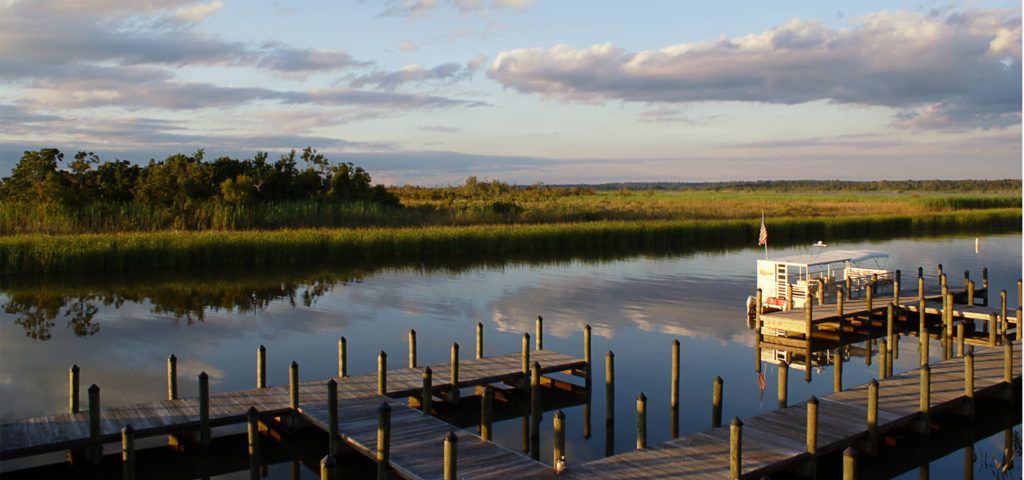
For me, the Gulf Coast – vibrant, soulful, expansive, can’t really be contained digitally. Raised in the north, I fled south as soon as I could and by way of Port Aransas, Texas to Key West, Florida and all the places in between, I’ve spent my adult life living in, working along, and being charmed by the U.S Gulf Coast. Sadly, a disastrous mix of hurricanes, rising seas and sinking land, and human exploitation now amplified by a changing climate, puts the region on the front lines of climate change. When the COVID-19 pandemic necessitated shifting a planned traveling, in-person component of this course to a fully virtual model, I was at first disappointed to lose that tangible connection to swamp, sand, and surf. Yet in building the content for course and weaving together the concepts, people, and places of the region, it became clear to me that virtual or not, points of connection in this course abound.
First, the people. Any endeavor in learning is only as good as the people involved and withcapacity for 100 participants from across the region, ACGR will convene a richgroup of conservation practitioners to learn from each other as they learn fromcourse speakers and resources. Courseregistrations are ongoing and will be accepted through June 1st. On the project team, we are working hard toensure a diverse mix of participants spanning the geographies, areas ofexpertise, stages of career, and perspectives that represent this manifoldregion. To make ACGR as interactive aspossible, we are customizing a robust virtual platform to allow participants toengage with ease throughout the course. We hope that participants in this course not only learn from each otherbut begin to get to know each other as well. The collaborative final project, a compendium of participantprofessional work that integrates concepts covered in ACGR, is intended as aresource to spark ongoing connection, and perhaps even offer kindling toward aregional network of natural resource-focused adaptation professionals that wouldbuild capacity and provide support far beyond the 18 weeks of formal courseinstruction.
In ACGR, the content is built around and anchored inconnection as well. As any adaptationprofessional can attest, connecting broad, foundational concepts to crisp andclear examples or case studies can be a challenge. We seek to do this in ACGR with theinvaluable help and guidance of ASAP’s K&C Framework. To develop course content, we’ve anchoredeach of nine session topics to a Foundational Knowledge Concept and alignedsupporting resources to Core Competencies and Glossary Terms identified in theK&C Framework. In many cases, thisintegration was seamless, such as linking a planned session on “CommunicatingAdaptation Solutions” to the “Communication” Foundational Knowledge Concept,and it was affirming to see the clear link between a broad framework for alladaptation professionals and a regionally-focused curriculum cultivated fornatural resource managers. At othertimes, we had to work a bit harder to integrate Foundational Knowledge Conceptslike “Mitigation,” or associated Core Competencies like “Building PsychologicalStrength to Proactively Confront Change” that are not obvious fits within atypical adaptation for natural resources curriculum. But stretching our assumptions to linkapparently disparate concepts and reaching for the opaquer connections is whatI hope will make this course stand out and deliver value to those whoengage. Weaving a complex web ofconnections – connecting ideas, methods, science, people, and places, isinherent in so much of what we do as adaptation professionals. In weaving these connections to build a newcourse, it’s been a boon to apply the K&C Framework as a guidepost.
Finally, I would be remiss not mention the personal connection this course represents for me. As a former full-time employee of both ASAP and FWC, two organizations for which I have incredible respect, it is an honor and great fun to be coordinating this collaborative endeavor. Please reach out directly with any questions and remember that registration closes on June 1.